Death: Letting Go Without Collapse
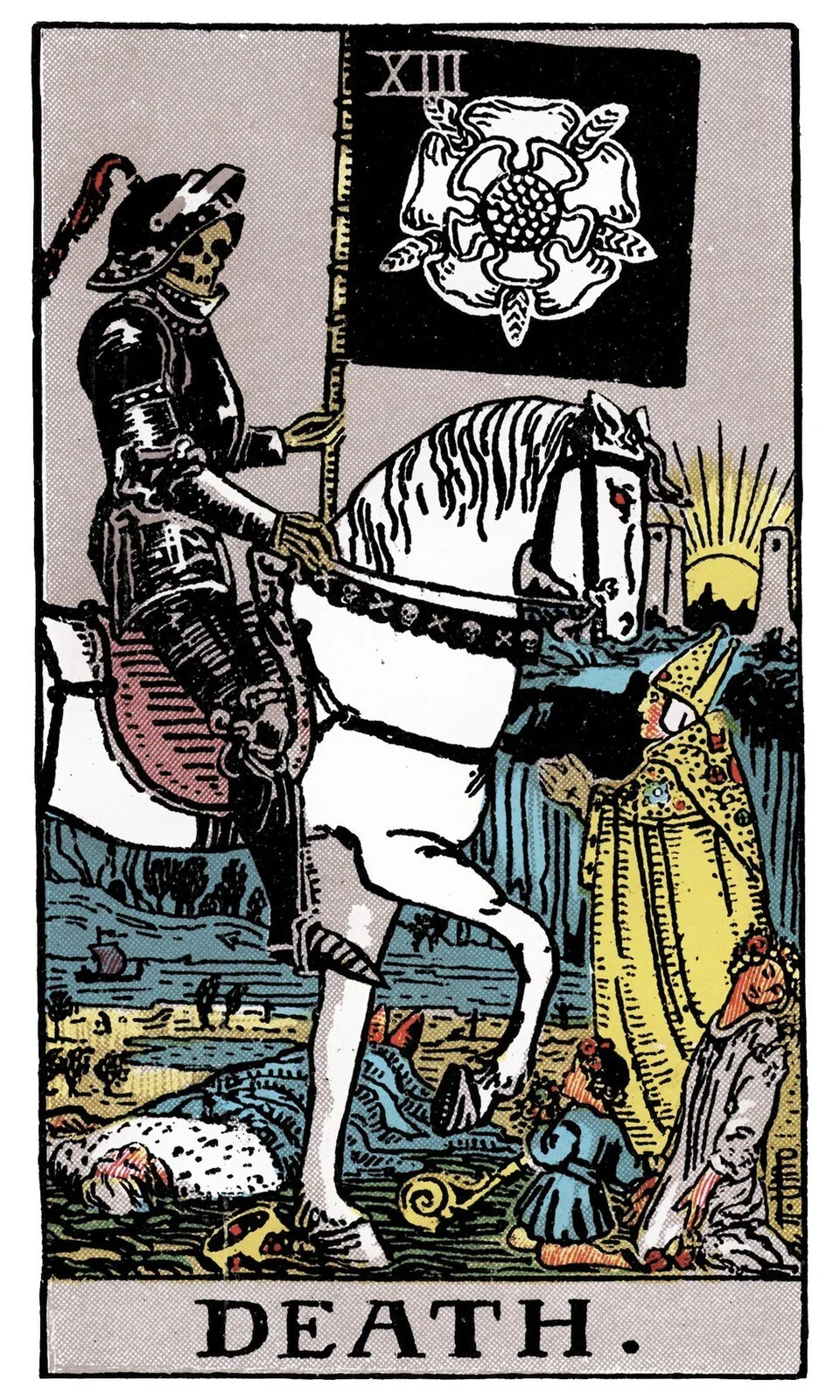
The Death card is one of the most feared images in the tarot.
It is often associated with loss, endings, and things taken too soon.
But this fear comes from misunderstanding what the card is actually pointing to.
Death, in tarot, is not about destruction.
It is about completion.
What ends was already finished.
What follows does not need to be forced.
If you look closely at the card, there is a detail that is often overlooked:
a young child offering flowers to the rider of Death — not in terror, but in curiosity.
There is no violence in that gesture.
There is innocence. Openness. Willingness to meet change.
What hurts us is rarely change itself.
It is our attachment to what has already completed.
From a nervous system perspective, this distinction matters deeply.
When endings are resisted, the body braces.
When endings are forced, the system collapses.
But when endings are allowed, the nervous system can stay regulated even in transition.
Death does not ask us to stop acting.
It asks us to act without gripping the outcome.
This is the paradox:
Aligned action is still required —
even when certainty is unavailable.
Letting go does not mean passivity.
It means releasing what no longer serves while continuing to move in integrity.
This kind of release requires attunement.
It requires the capacity to feel fear without being governed by it.
It requires trust — not blind faith, but embodied trust in timing.
When the nervous system is regulated, we can do this.
We can end things without collapsing.
We can step forward without guarantees.
We can allow what is finished to fall away without making it mean something is wrong.
Death teaches this quietly:
Release what is complete.
Act in alignment.
Trust the timing.
Nothing is being taken from you here.
Something is simply making space.